
Abgoosht in a Stone Dizi: The Slow-Cooked Soul of Iranian Cuisine

Some dishes in Iranian cooking are defined as much by how they arrive at the table as by what goes into them. Abgoosht — and especially the version simmered in a stone pot, dizi sangi — is exactly that kind of dish. It has been cooked the same unhurried way for centuries: low heat, no rushing, flavour gathering slowly.
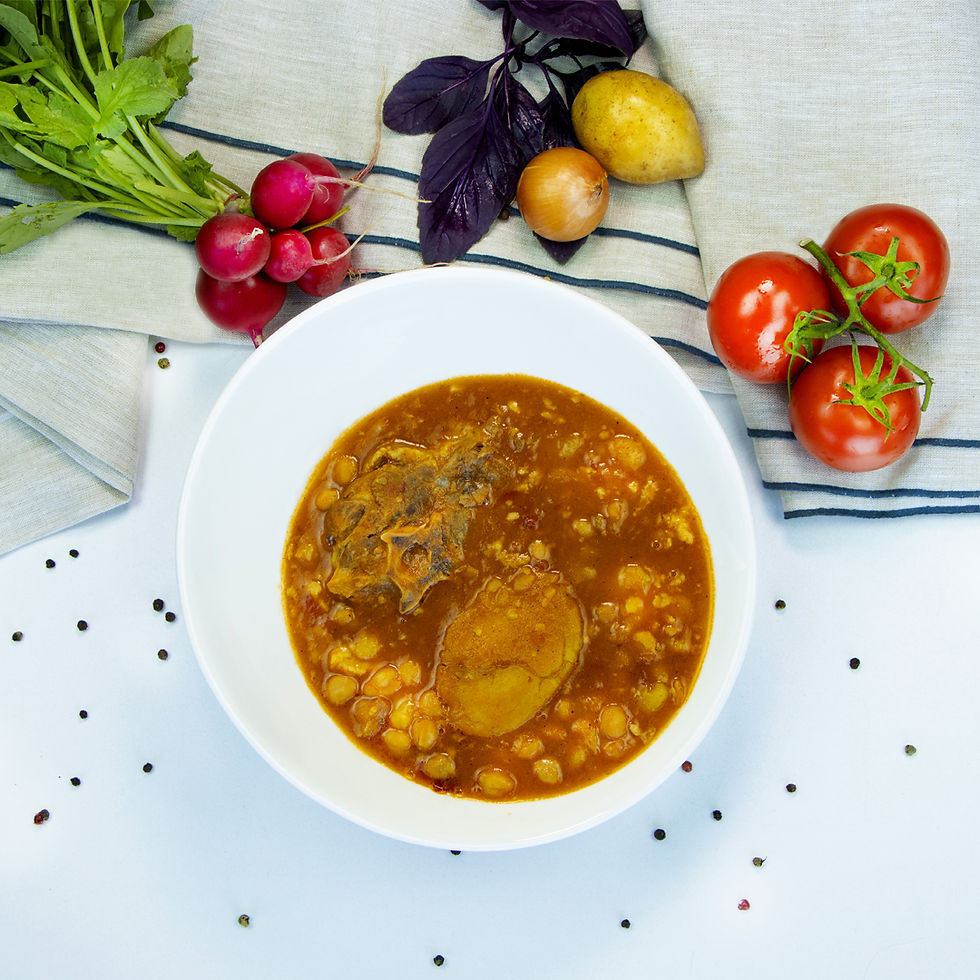
The ingredient list is surprisingly plain. Lamb on the bone, chickpeas, dried white beans, onion, potato, tomato and turmeric. The signature comes from limoo omani, Persian dried lime, which gives the broth its bright, faintly sour edge. Everything cooks together for hours, until the meat slips off the bone on its own and the broth deepens into a dark gold.
The stone dizi is the heart of it. Porous natural stone spreads heat evenly and releases it slowly, so the pot is still gently bubbling when it reaches your table. Serving is a ritual of its own: the clear broth is poured off into a separate bowl and torn pieces of sangak or lavash bread are soaked in it — this is called tilit. The solids are then pounded with a gooshtkoob, a small pestle, into a soft, savoury paste eaten with bread, raw onion and pickles.
In Iran, abgoosht was never meant to be eaten quickly. It is traditionally a Friday lunch — the meal where the family gathers and nobody looks at the clock. In Tehran and Tabriz there are dizi houses that serve almost nothing else. Sharing is part of the recipe too: one stone dizi is usually enough for two.
If you would like to taste real Iranian abgoosht slow-cooked in a stone dizi, we would be glad to welcome you at Sudi Restaurant — a dish made with patience, and made for sharing.

Comments